
Bridge loans
Short-term debt before or after the build, while the building fills up.
Explore bridge loansBuilding something new asks more of its financing than almost any other project. We help you present a budget, a schedule and a take-out that a construction lender can rely on, then bring in the lenders who know the asset and the market.

Construction debt pays for building a new property or substantially rebuilding an existing one. It is not advanced in a single sum. The lender releases it in stages, called draws, each paid once the work it covers is done and checked against the budget, so the money follows real progress on site.
A construction loan has more moving parts than most financing: the budget, the schedule, the contractor, the draw process, the risk of not finishing and the plan for repaying the loan once the building is complete. Lenders size it against the total project cost (loan to cost, LTC), and expect your equity, and any reserve they require, to be in place before the first draw.
We help you assemble a request a construction lender can approve: a realistic budget with contingency, a loan sized to cost, and a clear route from completion to a long-term loan or a sale. Then we approach the lenders active in your asset type and your market. We advise and arrange; lenders underwrite, set terms and fund.
Four kinds of project make up most construction financing.
A new commercial property on land you own or are buying, from the foundations to the first occupier.
A conversion to a new use or a rebuild to a higher standard, where most of the value is still to be created.
A larger scheme delivered stage by stage, with funding matched to each phase and its milestones.
New or enlarged premises for a known occupier, including a business building for its own growth.
Construction money is released against checked progress. We help you settle the budget, the loan to cost and the route from completion to take-out before a lender sees them, then approach lenders who know the asset and the market.
If most of the first column describes your project, a conversation is worth having.
The project is defined, with a budget, a schedule and a team in place.
The project is still an idea, without a budget, plans or entitlements.
Your equity, and any reserves a lender will require, is committed and available.
Nothing yet explains how the construction loan will be repaid once the building is finished.
There is a credible way to repay the loan at completion: a long-term loan or a sale.
The costs and the schedule have not been tested, and nothing is set aside for overruns.
You or your builder have delivered projects of a similar type and size.
You want the build funded almost entirely with debt, with little equity of your own.
Underwriting a building that does not exist yet comes down to five questions.
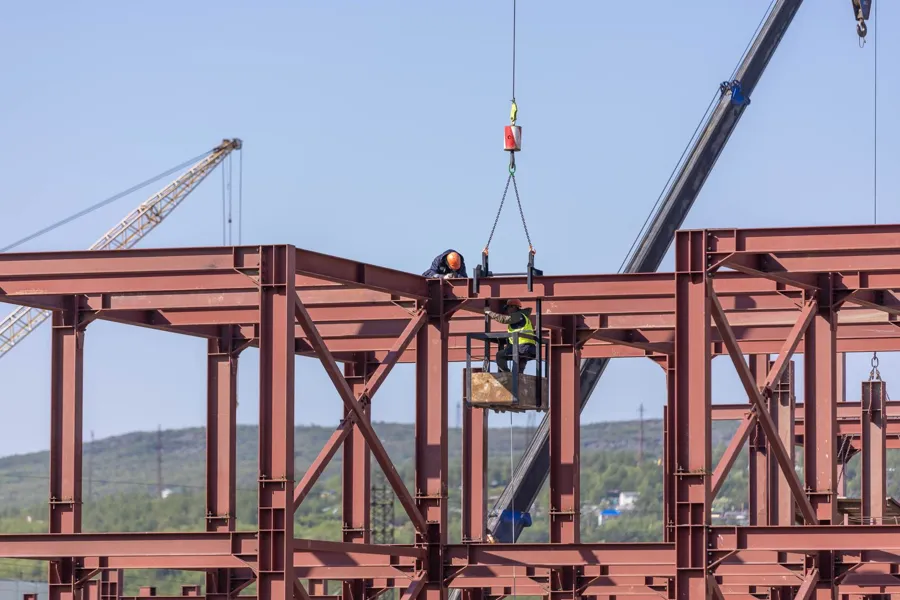
A detailed cost plan, checked by the lender’s own consultant, with a contingency large enough for the overruns projects usually meet.
The share of the whole project cost the loan provides, and how much comes from your equity. The lender may also cap the loan against the finished value.
How the construction loan will be repaid once the building is finished, usually by a long-term loan or a sale, and whether the completed building will qualify.
The strength of the general contractor, how realistic the schedule is and the record of the sponsor and builder on similar work.
Evidence that the finished space will be let or sold: pre-leases, committed buyers or the take-up of comparable space nearby.
Most projects use a senior construction loan, sometimes with another layer beside or behind it. The mix depends on how far the senior lender will go and how much equity you want to commit.
Nothing here needs to be final before we speak. These are the documents that make a construction request credible, and the sooner they exist, the sooner lenders can engage. Not all of them apply to every project.
0of 8 in hand
Select what you already have. You can start with none of it.
Nothing you select here is sent or stored.
Enter the land, the hard and soft costs, a target loan to cost and an illustrative rate. The model splits the cost between loan and equity and estimates the interest reserve, allowing for the way a construction loan is drawn over time.
Construction loan
–
Nothing you enter is stored or sent.
Light industrialA developer holds an entitled site near a highway interchange and plans three small-bay industrial buildings, with the equity committed.
We present the budget, schedule, loan to cost and take-out as one request, and show the leasing demand for small bays nearby.
Construction lenders active in industrial receive a complete package, with the first building’s draws timed to the site work.
Office to apartmentsA sponsor wants to convert a vacant 1970s office building into rental apartments.
We frame the conversion budget with a generous contingency, set out the risks a lender will see and map the route from completion to a long-term loan.
The request goes to lenders with experience of conversions, with controls on the budget built in from the start.
Gap in the budgetAfter a rise in building costs, a multifamily developer’s senior lender will fund less of the cost than the plan assumed.
We look at a mezzanine layer sized so the combined debt can still be repaid from the finished building, and at where the budget can be trimmed.
Where lenders have the appetite, a senior and subordinate structure is coordinated so both close together.
Illustrative situations only: not actual transactions or outcomes. Every financing remains subject to lender underwriting and approval.
Three stages, and the first costs you nothing.
The site, the plans, the budget, the timetable and the equity you have committed. No cost and no credit pull to start.
An advisor reviews the project from your side, tests the budget and the take-out and tells you plainly what we think is achievable.
We prepare the package, run a competitive process among construction lenders suited to the project and negotiate through to the close.
Short-term debt before or after the build, while the building fills up.
Explore bridge loans
The long-term loan that takes out construction debt at stabilization.
Explore permanent financing
Subordinate capital that narrows the gap between the loan and your equity.
Explore mezzanineIf yours isn’t here, ask us directly. A first conversation costs nothing.
Speak with an advisorThe lender releases the loan in stages against the budget. Each request is checked, usually by an inspector who confirms the work is done, and by a title update and lien waivers showing that contractors have been paid. The money follows progress, which protects the project as well as the lender.
Loan to cost (LTC) is the loan as a share of the total project cost, including land, hard costs and soft costs. Loan to value (LTV) compares the loan with what an appraiser expects the finished building to be worth. Construction lenders size mainly to cost; on ground-up projects the loan commonly covers somewhere between 55% and 70% of it, with your equity making up the rest. Many lenders also cap the loan against the completed value, and where a project lands is settled in underwriting.
An amount within the loan that covers the interest while the building is going up and earning nothing. Since the loan is advanced a little at a time, interest runs only on what has been drawn so far. A rough estimate takes the loan, the rate and the construction period and assumes that, on average, about half the loan is outstanding: more if spending comes early, less if it comes late. The lender sets the actual reserve in underwriting.
Around the way money is actually spent on site. Spending usually starts slowly, peaks in the middle of construction and tapers toward completion, so the outstanding balance, and the interest on it, grows over the build rather than starting at the full amount. Each draw is matched to completed work.
The take-out is how the construction loan gets repaid when the building is finished and stabilized: most often by a long-term loan, sometimes by a sale. Construction loans are short by design, so a lender wants to see a believable route to repayment before it funds the first draw. A construction-to-permanent loan combines both stages in one closing.
It depends on the property type and the lender. Signed leases, presales or committed occupiers can reduce the equity required or improve the terms, while apartments and speculative projects are often underwritten on market demand instead. A build-to-suit for a known occupier is assessed differently again.
The contingency in the budget exists for exactly this. Beyond it, lenders typically expect the sponsor to cover overruns, often backed by a completion guaranty. Additional capital can sometimes be found, but it should never be assumed. A realistic budget and a sufficient contingency are the best protection.
A success fee, earned only when your financing closes. No retainer and no upfront fee. Costs a lender requires (appraisals, reports, legal) are paid to those providers directly.
Every construction request is placed with lenders chosen for the asset type and the market, from a network that spans banks and credit unions, specialty lenders, debt funds and family offices.
Marlmont Capital advises borrowers on commercial debt, and only borrowers. Before anything goes to a lender, we learn the transaction, define the capital it needs and choose the debt route that fits.
Send a few details and an advisor will arrange a call of about 30 minutes. No cost and no credit pull to start.
Marlmont Capital is a debt advisory firm. It advises borrowers and arranges financing from third-party lenders; it is not a lender and does not offer securities or investment, tax or legal advice. Financing is subject to lender underwriting, diligence and approval, and terms are set by the lender. Figures and examples on this page are illustrative and are not a quote, offer or commitment.