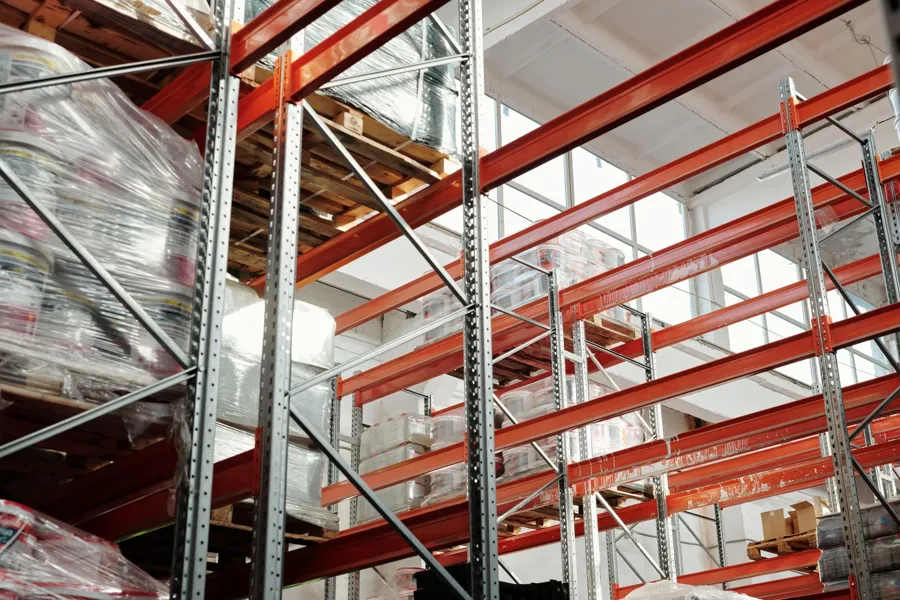
Asset‑based lending
A line sized to receivables and inventory, which grows as they do.
Explore asset-based lendingA business that is growing, or heading into its busy season, often has to spend before its customers pay. We size that gap honestly, choose the facility that fits how cash moves through your business and bring lenders who know your sector to compete for it.

Working capital financing carries a business through the stretch between money going out and money coming back: wages, stock, materials and the weeks a customer takes to settle an invoice. It is repaid from the cash that same cycle produces, so the business can take on work at the pace orders arrive.
The right facility turns on the cause of the gap. A seasonal peak suits a revolving line that is drawn and repaid within the year. A step up in size, such as a large new contract or a second site, can suit a term loan. A business with a sizable receivables ledger or substantial stock may borrow more, on better terms, by pledging those assets directly. Choosing among them is the first piece of work we do.
We advise and arrange; lenders underwrite, set terms and fund. With 2,588+ capital sources to draw on, from banks and credit unions to specialty and asset-based lenders, we look for the lenders who understand your sector and your cycle, so the facility supports the business instead of straining it.
Most requests begin with one of four situations.
Months of heavy spending before the busy season pays it back, smoothed by a line that rises and falls with the year.
More orders bring more stock, more staff and more invoices outstanding, all paid for before the extra revenue lands.
Inventory bought early, to secure supply or a better price, and repaid as it sells through.
Work delivered and invoiced, with customers on terms of a month or more while wages and suppliers fall due now.
Before any lender sees the request, we confirm the gap comes from timing rather than margin, then match it to the structure that suits it: a revolving line, a loan for a fixed term, or a facility secured on receivables and stock. The result is liquidity sized to the business you actually run.
If most of the first column sounds like your business, a conversation is worth having.
The business makes money; the strain comes from when cash arrives, not whether it does.
The business loses money on what it sells, and borrowing would postpone the problem rather than solve it.
Customer receipts and stock sold can repay what you draw.
The money is for a building or a machine you will use for years: equipment or real estate financing suits that better.
You would rather borrow than sell a share of the company to fund operations.
The need is large and backed by substantial receivables and stock: an asset-based facility may carry more of it.
The need comes back each year or each season, so a facility you can draw again would help.
Margins are too thin to carry the cost of borrowing, even once customers pay.
Credit teams differ, but on a working capital request these five come up almost every time.

The path from paying a supplier to collecting from a customer, and the point in that path where the business runs short.
Evidence that the business earns money and that the shortfall is temporary, not the sign of a model that does not pay.
The size and quality of what customers owe and what sits in inventory, since either may support or repay the facility.
How long the business has traded, its credit record and the support its owners can offer.
What the money will do and the cash that will pay it back, set out in a forecast a lender can follow.
Four structures cover most needs, alone or side by side. Which one fits depends on whether the need repeats, how large it is and what the business holds that a lender can take as security.
None of this is needed before we speak. These are the documents lenders will ask for, and having most of them early shortens every later step. Not all of them apply to every business.
0of 8 in hand
Select what you already have. You can start with none of it.
Nothing you select here is sent or stored.
Enter your sales, how long customers take to pay, how long stock sits and how long you take to pay suppliers. The model works out your cash conversion cycle and gives an illustrative figure for the cash tied up in it.
Working capital tied up
–
Nothing you enter is stored or sent.
Harvest buyerA fruit processor buys most of a year’s crop in a few weeks of harvest, then sells the finished product steadily over the following months.
We size a line to the harvest peak and the pace of sales, and present the stock as security alongside the earnings record.
Lenders that know food processing are asked for a line drawn at harvest and repaid as product ships.
New contractA machining company wins an order that doubles its workload, but must buy steel and add a shift weeks before the customer’s first payment.
We compare a term loan for the step up with a line secured on the new receivables, and test both against the contract’s payment terms.
The company approaches lenders with a forecast built on the contract, aiming for a facility that grows with the order book.
Costly advancesA building services company has bridged quiet months with a run of short, expensive cash advances that take a share of every day’s card receipts.
We check that the business is sound beneath the repayments, then build the case for one conventional line to replace them.
Banks and credit unions see a clear trading history and a plan to retire the advances, in pursuit of a lower-cost structure.
Illustrative situations only: not actual transactions or outcomes. Every financing remains subject to lender underwriting and approval.
Three stages, and the first costs you nothing.
What you do, where the gap appears, roughly how large it is and when you need the facility in place. No cost and no credit pull to start.
An advisor looks at the cycle from your side, confirms what is driving the need and tells you plainly which structure we think fits.
We prepare the package, run a competitive process among suitable capital sources and negotiate the facility through to the close.
A line sized to receivables and inventory, which grows as they do.
Explore asset-based lending
Borrow against invoices and keep collecting from your customers yourself.
Explore invoice financing
If yours isn’t here, ask us directly. A first conversation costs nothing.
Speak with an advisorAnything that keeps day-to-day operations funded while cash is in transit: wages, stock, materials and the invoices customers have yet to pay. It is a question of liquidity. Buying a building or a machine you will use for years is a different financing.
A line suits a need that comes and goes, because you draw only what you use and repay as cash comes in. A term loan suits a single, defined purpose with a clear payback. Many businesses hold both. Mapping how cash moves through your year usually makes the answer plain.
Usually, though how much depends on the size of the facility and the strength of the business. Smaller facilities for profitable companies may be lightly secured or backed by a general lien on business assets. Larger ones are commonly secured on receivables and inventory and sized by a borrowing base. Owners are often asked to stand behind the facility personally as well.
We arrange conventional debt from banks and established lenders: revolving lines, term loans and borrowing-base facilities. Merchant cash advances can cost far more than their headline suggests, and helping a business move off them is often part of our work.
It can bridge a gap in timing for a business that makes money. It cannot repair a business that loses money on what it sells, and adding debt there usually makes matters worse. If that looks like the issue, we will say so on the first call.
A useful first measure is your cash conversion cycle. Add the days customers take to pay (days sales outstanding, DSO) to the days stock waits to be sold (days inventory outstanding, DIO), then subtract the days you take to pay suppliers (days payables outstanding, DPO). Take that number of days as a share of the year and apply it to annual sales or cost of goods, and you have a rough measure of the cash the cycle holds. The model on this page works it through with your figures.
By the lender, and it varies with the structure and your credit. A revolving line is usually priced at a margin over a benchmark rate and charged on what you have drawn, sometimes with a small fee on the unused part. A term loan has a rate that is either fixed or floating for its whole life. We compare offers on their full cost, fees and conditions included, not on the headline rate alone.
A success fee, earned only when your financing closes. No retainer and no upfront fee. Costs a lender requires (appraisals, reports, legal) are paid to those providers directly.
Every working capital request goes to lenders chosen for that business and its cycle, from a network that spans banks, credit unions, specialty and asset-based lenders and private credit.
Marlmont Capital advises borrowers on commercial debt, and only borrowers. Before anything goes to a lender, we learn the transaction, define the capital it needs and choose the debt route that fits.
Send a few details and an advisor will arrange a call of about 30 minutes. No cost and no credit pull to start.
Marlmont Capital is a debt advisory firm. It advises borrowers and arranges financing from third-party lenders; it is not a lender and does not offer securities or investment, tax or legal advice. Financing is subject to lender underwriting, diligence and approval, and terms are set by the lender. Figures and examples on this page are illustrative and are not a quote, offer or commitment.